Autumn Wanderlust
A Designer’s First Glance: Warm, Wistful, and Ready for Stitching
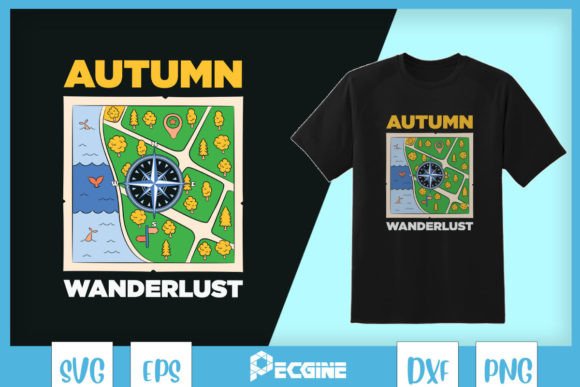
Opening Autumn Wanderlust feels like stepping into a sunlit forest path in early October—crisp air, amber light, and quiet movement. It’s not overly busy or literal; instead, it leans into mood with layered foliage, gentle curves, and a soft asymmetry that suggests wind, travel, and seasonal transition. As an embroidery designer who’s stitched hundreds of fall-themed pieces—from baby onesies to boutique aprons—I immediately noticed how its balance of open space and intentional detail makes it feel *breathable* on fabric. That matters. Too many “autumn” designs drown in acorns and pumpkins; this one trusts negative space and rhythm to carry the theme.
Where It Shines: Real Projects, Real Customers
Last week, I prepped a custom embroidered tote bag for a local bookstore’s holiday launch—cotton canvas, medium-weight, 8" x 10" hoop. I chose Autumn Wanderlust for the front panel. Why? Because it scaled beautifully without distortion, held clarity at 4.5" wide (my target size), and didn’t compete with the bag’s natural texture. Customers responded instantly—not just to the imagery, but to how *intentional* it looked. No pixelation, no jagged edges, no awkward gaps between leaves. That’s the difference between a digital graphic and a thoughtful machine embroidery design.
I’ve also used it on organic cotton sweatshirts (medium-stretch knit) and linen tea towels—two very different surfaces—and each time, the design adapted gracefully. On the sweatshirt, I paired it with a lightweight cutaway stabilizer and kept stitch density moderate; the satin stitch elements (like leaf veins and subtle stems) stayed crisp, not stiff. On the tea towel, I opted for a lighter fill stitch in the background foliage—less density meant better drape and softer hand-feel after washing. That flexibility is rare in seasonal digital embroidery files.
Where to Pause—Not Every Fabric or Fit Is Equal
Autumn Wanderlust isn’t magic. It’s elegant, but elegance needs support. On thin fabrics like rayon challis or delicate baby muslin, I’d avoid dense fill areas near the center unless using tear-away + iron-on combo stabilizer. The design’s graceful curves can pull slightly on stretchy knits if hooping isn’t precise—so test on scrap first, especially for custom apparel like toddler tees or women’s cropped sweatshirts.
For curved surfaces—think baseball caps or structured bucket hats—the outermost leaves and tendrils may need slight digitizing tweaks depending on your machine’s cap frame. The original embroidery file works cleanly on flat goods, but don’t assume it auto-adjusts for 3D contours. Likewise, on dark fabric, I recommend testing thread colors beyond standard autumn palettes: a warm charcoal gray for stems or a deep olive for shadows adds sophistication without muddying contrast.
Small Hoop? Think Twice—Then Simplify
If you’re limited to a 4" hoop, Autumn Wanderlust still works—but trim expectations, not the design. Focus on one quadrant: maybe just the lower-left cluster of leaves and vine, resized to 3.25". You’ll lose some of its wandering flow, but gain tight cohesion. Avoid shrinking the full layout below 3.75"—fine details like tapered tips and inner veining begin to blur, and running stitch accents risk becoming indistinct. This isn’t a flaw; it’s a reminder that good embroidery project planning starts with honest sizing.
What It Does for Your Craft Business
As an Etsy seller and small shop owner, I judge designs by three things: how fast they convert browsers into buyers, how little rework they demand, and how confidently I can list them as “ready-to-embroider.” Autumn Wanderlust checks all three. Its transparent-background PNG and EPS files make mockup creation effortless—I dropped it straight into Canva templates for social posts and product listings, and customers consistently comment on how “realistic” the preview looks. That trust transfers directly to perceived value.
It also reinforces brand consistency. Whether you sell handmade nursery decor or modern holiday gifts, Autumn Wanderlust doesn’t scream “craft fair cliché.” It reads as curated, calm, and quietly commercial—ideal for boutique branding or a cohesive seasonal collection. I’ve paired it with minimalist monograms and subtle text blocks in my own craft business, and the result feels elevated, not overdesigned.
Practical Notes from the Hoop
- Always test on scrap fabric matching your final project’s weight and stretch—even if it’s “just a tote bag.” Thread tension shifts unexpectedly on textured weaves.
- Review stitch density before stitching. If your machine struggles with dense fills, reduce density by 5–10% in the leaf clusters—clarity stays intact, but wearability improves.
- Check hoop size compatibility. The design fits comfortably in a 5"x7", but verify your software’s bounding box before sending to the machine.
- Inspect tiny details at 200% zoom: are inner veins fully connected? Are corners smooth, not pixelated? The SVG and EPS files hold up well—but always confirm.
- Test black-and-white mockups. Does the design retain hierarchy without color cues? Autumn Wanderlust does—it’s built on shape and rhythm, not just pigment.
- Confirm licensing before selling finished items. Since this is a Graphics product in the Crafts category, review terms carefully—especially if bundling into digital kits or offering as part of a subscription.
The Last Stitch
Autumn Wanderlust won’t fix poor stabilizing or rushed hooping—but it will reward thoughtful execution. It’s the kind of embroidery design that makes customers pause mid-scroll, imagine it on their favorite sweater or kitchen towel, and think, “Yes—that’s the one.” Not because it shouts, but because it breathes with intention. For personalized gifts, small shop products, or even a quiet batch of embroidered patches for a local maker market, it lands with warmth, authenticity, and quiet professionalism. That’s not easy to find in seasonal design assets. And that’s why it stays in my active folder—not filed away, but ready to stitch.