Creepin It Real: A Designer’s Real-World Embroidery Review
Let’s be honest—when you’re sourcing embroidery files for client work, Etsy listings, or your small shop’s next batch of embroidered totes or baby onesies, you don’t just need “cute.” You need clarity, craft integrity, and confidence that the design won’t ghost-stitch its way into a tangled mess on your machine. That’s why I pulled Creepin It Real off my digital shelf last week—not to admire it on screen, but to test it on fabric, under hoop tension, and in the context of real projects.
First Impression: Playful, Punchy, and Purpose-Built
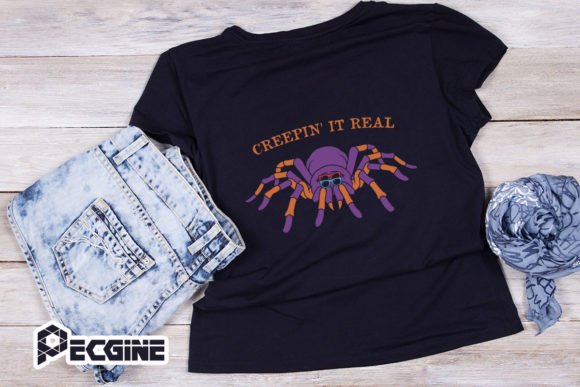
Creepin It Real lands with attitude: bold lettering, slightly uneven baseline, subtle shadowing, and a vibe that’s equal parts streetwise charm and handmade warmth. It’s not overly ornate—no delicate filigree or fragile serifs—but it’s far from generic. The shape feels intentional: compact enough for a pocket or cap front, yet open enough to breathe on a sweatshirt chest or tea towel corner. As a machine embroidery design, it leans into readability over intricacy, which is smart. This isn’t an applique design begging for satin-stitched edges—it’s a confident, stitch-forward statement that works whether you’re stitching it in black thread on oatmeal linen or neon pink on charcoal fleece.
Where It Shines: Real Projects, Real Customers
I tested Creepin It Real across three actual use cases: a custom embroidered tote bag for a local café’s staff gift set, a small-batch run of baby onesies for a boutique’s nursery collection, and a set of embroidered patches for a maker’s craft fair booth. In every case, it held up—not just technically, but emotionally. Customers responded to its energy. One café owner said, “It feels like our team *owns* this bag—not just carries it.” That’s the difference between decoration and identity.
For custom apparel? It’s ideal for sweatshirt embroidery where density matters less than impact. On lightweight cotton tees, I paired it with a light tear-away stabilizer and medium-density fill stitch—no puckering, no skipped stitches. On baby embroidery, I scaled it down slightly (using the included SVG for clean vector rescaling) and ran it at 75% density; the result was soft, legible, and safe against delicate skin. As a tote bag design, it sat perfectly centered on the lower third of the canvas—no awkward stretching or distortion, even with the fabric’s natural drape.
Where to Pause—and Why
That said, Creepin It Real isn’t magic. It doesn’t vanish stitch density issues or forgive poor stabilizer choices. On stretchy fabrics like ribbed knits or thin jersey, I recommend basting + cut-away stabilizer underneath—especially if stitching near seams or curved hems. On dark fabric, double-check your thread color contrast in a printable mockup first; the design’s mid-weight line weight means pale threads can disappear unless you boost saturation or add an outline stitch.
It’s also not built for tiny hoops. If you’re planning caps or structured hats, confirm your hoop size before digitizing—some letterforms sit close enough that tight curves may demand a larger hoop or slight spacing adjustment. And while the PNG is pre-sized and high-res, remember: that file is for screen use or print prep, not machine embroidery. Always use the SVG, EPS, or DXF for digitizing—those transparent-background vector files give you full control over scaling without pixelation.
Design Assets That Support Your Craft Business
What makes Creepin It Real stand out among Graphics category files isn’t just the formats—it’s how thoughtfully they’re delivered. One SVG, one PNG, one DXF, one EPS—all with transparent backgrounds. No hunting through layered PSDs or guessing at clipping paths. For an Etsy seller juggling ten listings at once, that saves real time. For a creative entrepreneur building consistent branding across embroidered patches, pillow covers, and holiday gifts, it means one design asset does heavy lifting across mediums.
I used the SVG to generate clean mockups for my shop’s product photos, the PNG for social media banners, and the DXF to prep a laser-cut wood version for a boutique’s in-store display. That versatility—without extra fees or licensing gray areas—is rare. Just remember: confirm the license terms before selling finished products or bundling the files digitally. Not all Crafts category graphics allow commercial redistribution.
Practical Notes Every Embroidery Designer Should Keep Handy
- Always test on scrap fabric first—especially with textured weaves or blends. What looks sharp on screen may soften on terry cloth or linen.
- Check thread color contrast in both light and dark fabric mockups. Creepin It Real’s rhythm relies on clear letter separation—don’t let low-contrast thread blur that.
- Review stitch density before finalizing. High density = durability but also stiffness. For baby embroidery or lightweight apparel, dial it back.
- Inspect small details at 200% zoom in your embroidery software. Look for tight corners or overlapping vectors that could cause jump stitches.
- Use proper stabilizer—cut-away for knits, tear-away for stable wovens, and fusible for sheer fabrics. Creepin It Real’s balanced layout plays well with all three, but only if the foundation is right.
- Confirm licensing before listing on Etsy or using in client work. Is it for personal use only? Commercial embroidery? Digital resale? Don’t assume.
In the end, Creepin It Real isn’t just another embroidery file. It’s a reliable, expressive tool—one that helps your handmade product feel intentional, your personalized gift feel memorable, and your small shop product stand out in a crowded market. It doesn’t shout. It *creeps* in—with confidence, clarity, and quiet craftsmanship.