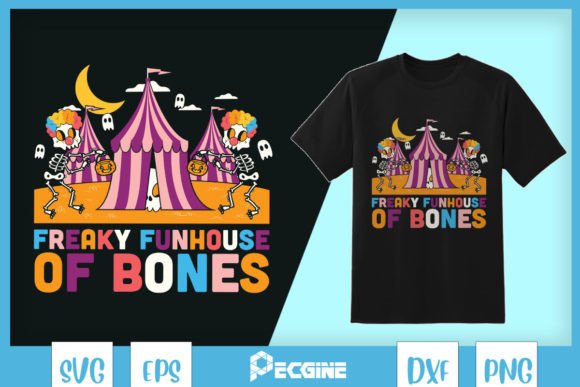
Freaky Funhouse of Bones: Graphics for Crafts & Creative Brands
As a brand designer who’s built visual identities for over 200 small businesses—and a content marketer who’s shipped hundreds of high-performing campaigns—I opened Freaky Funhouse of Bones expecting playful chaos. What I found was something sharper: a tightly crafted, mood-driven graphic design asset that balances irreverence with intentionality. It landed in my inbox as part of a seasonal campaign refresh for a handmade candle brand launching a “Spooky Season” limited edition line—think black currant + clove scents, matte kraft labels, and Instagram-first storytelling. That context made all the difference.
First Impression: Whimsy With Weight
Freaky Funhouse of Bones delivers instant tonal clarity. It’s not cartoonish—it’s cleverly macabre, with clean linework, balanced negative space, and subtle asymmetry that feels hand-drawn but digitally precise. The mood leans into nostalgic carnival energy: think vintage sideshow posters meets modern editorial illustration. For audiences, it signals approachability without sacrificing edge—ideal for lifestyle brands, indie publishers, online coaches with personality, or creative entrepreneurs who reject “corporate cute.” It reads as confident, not cluttered; fun, not frivolous.
Where It Strengthens Brand Communication
In real-world use, Freaky Funhouse of Bones excels where visual hierarchy and emotional resonance matter most. On Instagram posts, it anchors storytelling without competing with copy—its transparent background lets brand colors breathe. As a Pinterest pin header, it stops scrollers mid-feed thanks to strong silhouette recognition. In email banners or blog graphics, it adds texture without overwhelming readability. We tested it as a packaging accent on a sticker sheet for a digital product bundle—and it elevated perceived value instantly, signaling “this isn’t generic clipart.”
It supports key marketing goals directly: stronger first impression (via distinct visual tone), clearer visual hierarchy (its bold shape naturally draws the eye before text), more consistent branding (works across SVG, PNG, EPS, and DXF formats without quality loss), and improved audience trust (the craftsmanship reads as intentional, not stock).
Top 7 Marketing Uses That Just Work
- Hero graphics for seasonal campaigns—especially Halloween, Day of the Dead, or “dark academia” themed launches
- Branded Canva templates for social media managers needing plug-and-play consistency
- Packaging accents on boxes, tags, or inserts for handmade goods or subscription boxes
- Digital product visuals—ebook covers, printable planners, or course sales pages wanting character
- Editorial design elements in newsletters or blog roundups covering creativity, wellness, or alternative lifestyles
- Merchandise-ready art for stickers, tote bags, or enamel pins (thanks to crisp SVG and EPS scalability)
- Content bundles—paired with coordinating fonts and color palettes for creative marketplaces
Where to Use It Thoughtfully
This isn’t a universal drop-in asset. Avoid using Freaky Funhouse of Bones in formal corporate branding, legal disclaimers, or dense infographics—its personality dominates. It can overwhelm small mobile graphics if scaled below 120px height, and struggles on low-contrast backgrounds (e.g., light gray over off-white). Skip it for text-heavy Facebook ads or minimalist luxury brands—it contradicts quiet sophistication. And never place it where it competes with your core message: if your CTA is “Book Your Strategy Call,” don’t let bones distract from the button.
Brand Designer Notes You Can’t Skip
Before locking it into your campaign: test Freaky Funhouse of Bones against your full brand color palette—not just primary hues, but secondary and neutrals. Check how it renders in pure black and white (essential for laser-cut crafts or monochrome print). Drop it into real mockups: a Shopify product page, a Canva Instagram Story, a printed label. Preview on mobile—does the detail hold? Test readability when paired with your brand fonts: it sings with bold sans serifs (like Montserrat Bold) and contrasts beautifully with elegant serifs (like Playfair Display), but can clash with overly delicate scripts unless carefully spaced. Always confirm commercial licensing—this is a commercial design asset, yes, but verify usage rights for client work, paid ads, or resale products.
Why It Fits the Modern Creative Workflow
For content creators juggling Canva templates, digital product launches, and Pinterest-driven traffic, Freaky Funhouse of Bones solves a real problem: standing out without starting from scratch. Its multi-format delivery (SVG, PNG, DXF, EPS) means one purchase serves web design, print production, craft cutting machines, and editorial layouts. Unlike many clipart packs, it avoids visual fatigue—the composition has rhythm, not randomness. As a printable design, it scales flawlessly to A4 or letter size. As a digital product enhancer, it adds narrative depth to otherwise flat sales pages.
The Bottom Line for Small Business Branding
Freaky Funhouse of Bones isn’t just another illustration—it’s a strategic tone-setter. When aligned with audience expectations (think gothic-lifestyle bloggers, witchy wellness coaches, or indie game designers), it builds stronger recognition and emotional connection. It supports professional branding by adding memorable texture without compromising polish. For marketers building visual consistency across platforms—or designers sourcing reliable, license-cleared design assets—this is a rare find: a single graphic design asset that performs across crafts, digital ads, editorial design, and product labeling. Just remember: its power lies in purposeful placement—not volume.